The short answer
If you’re just starting out, a sole proprietorship is usually fine. It’s free, automatic and your taxes are exactly the same as with an LLC. Form an LLC when you have something to protect: bigger contracts, physical products, savings or a home, or plans to become an S-corp.
- Taxes: the same by default. A single-member LLC files the same Schedule C and pays the same 15.3% self-employment tax as a sole proprietor.
- Protection: an LLC keeps business debts and lawsuits away from your personal savings, car and home in most cases. A sole proprietorship doesn’t.
- Cost: $35 to $500 to form, depending on your state, plus a yearly fee in most states ($800 a year in California).
Side by side
| Sole proprietorship | Single-member LLC | |
|---|---|---|
| How you start | Automatic once you start working for yourself | File with your state |
| Cost to start | $0 (local licenses aside) | $35 to $500 state filing fee |
| Yearly cost | $0 | $0 to $800, depending on the state |
| Personal assets protected | No | Yes, in most cases |
| Federal income tax | Schedule C on your 1040 | Same: Schedule C on your 1040 |
| Self-employment tax | 15.3% | 15.3% (same) |
| Can become an S-corp | No | Yes, with one IRS form |
| Paperwork | Almost none | A yearly state report in most states |
Your taxes are the same either way
This is the part most people get wrong. The IRS treats a single-member LLC as a “disregarded entity”: it doesn’t exist for income tax purposes, and its income goes on your personal return. Same Schedule C, same 15.3% self-employment tax, same 20% QBI deduction, same quarterly estimated payments.
The only way an LLC changes your taxes is if you choose to have it taxed as an S-corp. That can save money once your profit is high enough, usually around $60,000 a year or more. A sole proprietorship can’t make that election. Here’s the math on S-corps.
What an LLC protects (and what it doesn’t)
As a sole proprietor, you can be held personally liable for your business’s debts and lawsuits. If a client sues the business, your personal savings are fair game. An LLC puts a wall between the two, so in most cases only the business’s money is at risk.
The wall has gaps. An LLC generally won’t protect you from:
- Your own mistakes. If your own work causes the harm, you can still be personally liable in most states. That’s what business insurance is for.
- Debts you personally guarantee. Loans, leases and many business credit cards make you sign personally.
- Mixing money. If you pay personal bills from the LLC’s account, a court can decide the LLC isn’t really separate. Keep a separate business bank account and a separate tax account.
For many solo service businesses, good insurance does more than an LLC. The two work best together.
What an LLC costs in your state
You pay a one-time filing fee to form it, then a yearly fee or report in most states. Form your LLC in the state where you live and work. Forming it in Delaware or Wyoming usually means paying twice, because you then also have to register in your home state.
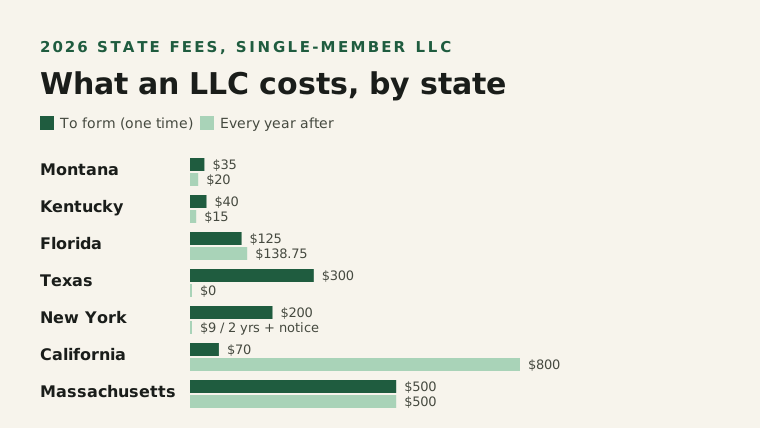
| State | To form | Every year after |
|---|---|---|
| Montana | $35 | $20 |
| Kentucky | $40 | $15 |
| Florida | $125 | $138.75 |
| Texas | $300 | $0 (a yearly report is still required) |
| New York | $200 | $9 every two years, plus a one-time newspaper notice |
| California | $70 | $800 minimum tax, plus $20 every two years |
| Massachusetts | $500 | $500 |
Two states to watch:
- California charges every LLC an $800 annual tax, even in a year with no profit. The first payment is due in the fourth month after you form it. The old first-year exemption only applied to LLCs formed in 2021 through 2023.
- New York requires new LLCs to publish a notice in two newspapers for six weeks within 120 days. Depending on your county, that runs from about $300 to $2,000 or more.
When a sole proprietorship is the right call
- You’re just starting out or testing an idea, and you’re not sure it will last.
- Your work is low-risk (writing, design, coding, consulting) and your clients aren’t asking for an LLC.
- You don’t have much in personal savings or property to protect yet.
- You live in a high-fee state and the yearly cost would eat a big share of your profit.
You can always form an LLC later. Nothing about starting as a sole proprietor locks you in.
When to form an LLC
- Your work could hurt someone or damage property: physical products, events, home services, anything with equipment.
- You sign bigger contracts, or clients ask you to have one.
- You have real assets to protect: savings, a home, investments.
- Your profit is heading toward $60,000 or more and you want the option to become an S-corp.
- You plan to hire or bring on a partner.
Switching from sole proprietor to LLC
- File your LLC on your state’s Secretary of State website. You can do it yourself for just the state fee.
- Get an EIN for the LLC from the IRS. It’s free and takes a few minutes online. Banks will ask for it.
- Open a business bank account in the LLC’s name and move your business money there.
- Update your clients: new invoices, contracts and a new W-9 in the LLC’s name.
- Keep paying quarterly taxes exactly as before. Nothing changes on your tax return.
FAQ
Does an LLC save me money on taxes? Not by itself. A single-member LLC is taxed exactly like a sole proprietorship unless you elect S-corp status.
Do I need an LLC to open a business bank account? No. Many banks open business accounts for sole proprietors. You’ll want a separate account either way.
Do I need a service like LegalZoom to form an LLC? No. You can file directly with your state for the state fee. Services add convenience, not legal protection.
Can a sole proprietor become an S-corp? Not directly. You need an LLC or a corporation first, then you file an election with the IRS.
Should I form my LLC in Delaware or Wyoming? For a one-person business, almost never. You’d still have to register and pay fees in the state where you actually work.
Sources
- IRS: Single-member limited liability companies
- SBA: Choose a business structure
- California Franchise Tax Board: Limited liability company
- LLC filing fees by state (as of June 2026)
- New York LLC publication requirement
General education, not legal or tax advice. State fees change; confirm yours on your state’s website, and talk to an attorney about liability for your type of work. New to self-employment taxes? Start with The Self-Employed Tax Survival Guide.