The short answer
Send a clear invoice the day the work is done, with a specific due date, easy ways to pay and a late-fee policy. Use “Net 15” terms (due in 15 days) instead of 30, take a deposit on bigger projects, and follow up the day after a payment is late. Most late payments are disorganized clients, not bad ones, and a polite system fixes them.
What to put on an invoice
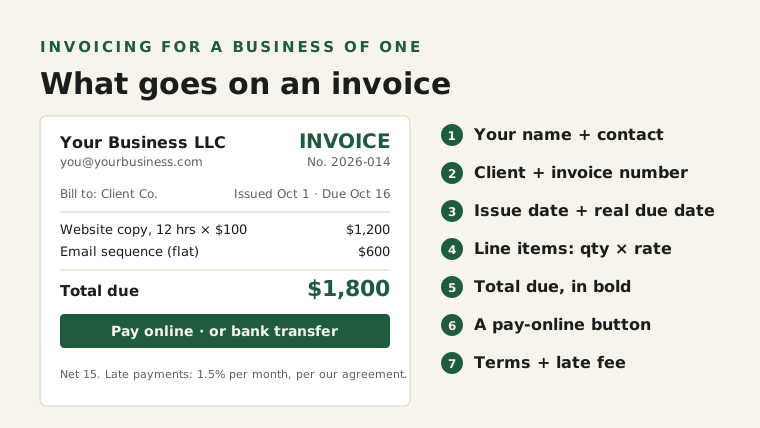
- Your business name and contact details. Your email is enough; you don’t need to show your home address.
- The client’s name and the person or department that pays.
- An invoice number. Simple and in order: 2026-001, 2026-002.
- Issue date and due date. Write the actual date (“Due October 16, 2026”), not just “Net 15”.
- Line items: what you did, how many hours or units, the rate, and the amount.
- Total due, in bold.
- How to pay: a payment link, bank transfer details, or both.
- Your terms: the due date and late fee you agreed on in your contract.
Payment terms that get you paid faster
- Net 15 or “due on receipt” for small clients. Net 30 is common with big companies, but there’s no rule that says you have to offer it.
- Deposits: ask for 25 to 50% up front on any project over a few thousand dollars. It’s normal, and it filters out clients who won’t pay.
- Milestones: bill long projects in stages instead of all at the end.
- Retainers: for ongoing work, bill at the start of each month, not the end.
- A late fee, written into your contract before work starts, such as 1.5% per month on overdue amounts. Check your state’s limits. You don’t have to enforce it every time; just having it gets invoices paid sooner.
Make it easy to pay you
| Method | Typical cost to you | Good for |
|---|---|---|
| Bank transfer (ACH) | Usually free | Most business clients; the default for larger invoices |
| Card payment link (Stripe, PayPal, invoicing apps) | About 3% of the invoice | Small clients who want to pay by card right away |
| Check | Free, but slow | Clients who insist; deposit with your bank’s app |
Many free tools send invoices with a pay-online button, including Wave and some business bank accounts. Whatever you use, make sure every payment lands in your business account so your bookkeeping stays clean.
When a client pays late
- 3 days before the due date: a friendly heads-up. “Just a reminder that invoice 2026-014 is due Friday.”
- The day after it’s due: “Invoice 2026-014 was due yesterday. Could you let me know when it’s scheduled?” Attach the invoice again.
- 7 days late: a firmer note, mention the late fee in your contract, and ask who handles payments if your contact doesn’t.
- 14 to 30 days late: pause any ongoing work until the account is current, and say so politely in writing.
- Still nothing: a final notice with a deadline, then small claims court. Filing is usually inexpensive and doesn’t require a lawyer, but limits and fees vary by state.
In New York, freelancers have extra protection. Under the state’s Freelance Isn’t Free Act, clients who hire you for $800 or more within 120 days must give you a written contract and pay by the agreed date, or within 30 days of the work if no date was set. Some cities have similar rules.
The tax side: W-9s and 1099s
- Send a W-9 with your first invoice. Business clients need your name, business name and taxpayer ID to report what they paid you. Sending it up front avoids delays. If you have an EIN, use it instead of your Social Security number.
- Form 1099-NEC: for payments made in 2026, a client must send you one if they paid you $2,000 or more during the year (it was $600 before 2026).
- Form 1099-K: payment apps and card processors send one if you received more than $20,000 across more than 200 payments in 2026.
- Report everything anyway. All business income is taxable whether or not a form shows up. Your own invoices and bank records are what you report from. Here’s how filing works.
- Set aside taxes from every payment as it arrives: 25 to 30%.
FAQ
Should I charge sales tax on my invoices? Most services aren’t subject to sales tax, but some states tax certain services and most tax physical products. Check your state’s revenue department for your type of work.
Can I pass card fees on to the client? Some states limit card surcharges, and card networks have their own rules. A simpler option is to offer a free bank-transfer option and build card costs into your rates.
What if a client disputes the invoice? That’s what the written contract is for. Point to the agreed scope and rate, and fix genuine mistakes quickly with a corrected invoice.
Sources
- W-9s and the $2,000 1099-NEC threshold for 2026
- 1099-K threshold for 2026
- New York’s Freelance Isn’t Free Act
General education, not legal or tax advice. Late fees, surcharges and small claims rules vary by state.