The short answer
Aim for 6 to 12 months of essential personal expenses, kept in a separate high-yield savings account. That’s double the usual advice for employees, because when you work for yourself there’s no unemployment check, no severance and no notice period. One lost client can take half your income overnight.
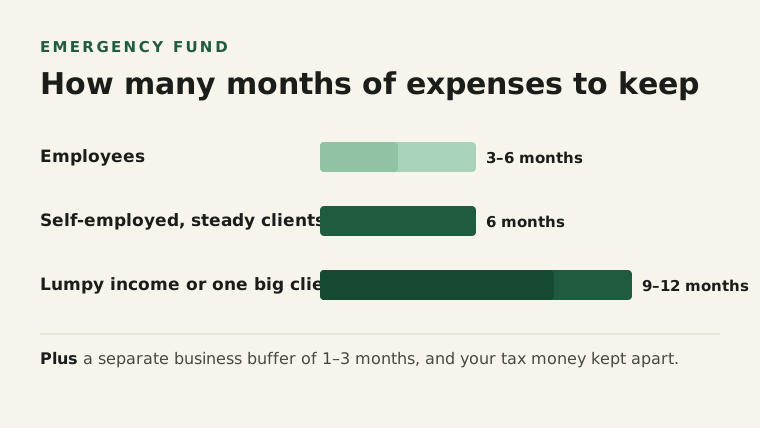
Where you fall in the range
Financial planners commonly suggest 6 to 12 months for people with irregular paychecks. Lean toward the higher end if:
- One client is more than a third of your income.
- Your income swings a lot from month to month or by season.
- You’re the only earner in your household, or have dependents.
- Your health insurance has a high deductible.
- Your industry is cyclical and dries up in a recession.
Six months is reasonable if you have several steady clients, a partner with a stable income, or a retainer-based business.
How to figure your number
- Add up your essential monthly expenses: housing, utilities, groceries, insurance, minimum debt payments, transportation. Leave out restaurants, travel and other flexible spending.
- Multiply by your number of months.
Example: essentials of $3,500 a month × 9 months = $31,500.
That sounds like a lot. You don’t build it all at once: the first $2,000 to $5,000 covers most surprises, and every month after that buys you time.
Three separate pots
Self-employed people mix these up all the time. Keep them in separate accounts:
| Pot | What it’s for | Size | Where |
|---|---|---|---|
| Tax account | Money you owe the IRS. Never an emergency fund. | 25–30% of income | Separate savings |
| Business buffer | Smoothing normal ups and downs so your paycheck stays steady | 1–3 months of pay + expenses | Business checking |
| Emergency fund | Real emergencies: losing a client, illness, a big repair | 6–12 months of essentials | Personal high-yield savings |
Where to keep it
- A high-yield savings account at an FDIC-insured bank (or NCUA-insured credit union). Good ones pay several percent a year with no monthly fee, and you can move money out in a day or two.
- Separate from your everyday checking, so you don’t dip into it for non-emergencies.
- Not in stocks. Emergencies and market crashes tend to arrive together.
How to build it on irregular income
- Automate a small fixed amount from every paycheck you give yourself, even $100.
- Send a share of every good month straight to it: once your business buffer is full, surplus goes here first. Here’s the full system.
- Count windfalls: tax refunds, a one-off big project, a bonus client.
- Refill it first after you use it, before anything else.
FAQ
Should I build an emergency fund or invest for retirement first? Get to at least one to three months first. After that, do both: tax-saving retirement contributions like a Solo 401(k) are hard to beat.
Can my tax money double as my emergency fund? No. It’s already owed. Using it means a bill plus penalties later.
What counts as an emergency? Something unexpected, necessary and urgent. A slow month is what the business buffer is for; a planned purchase is what savings goals are for.
Sources
General education, not financial advice.